
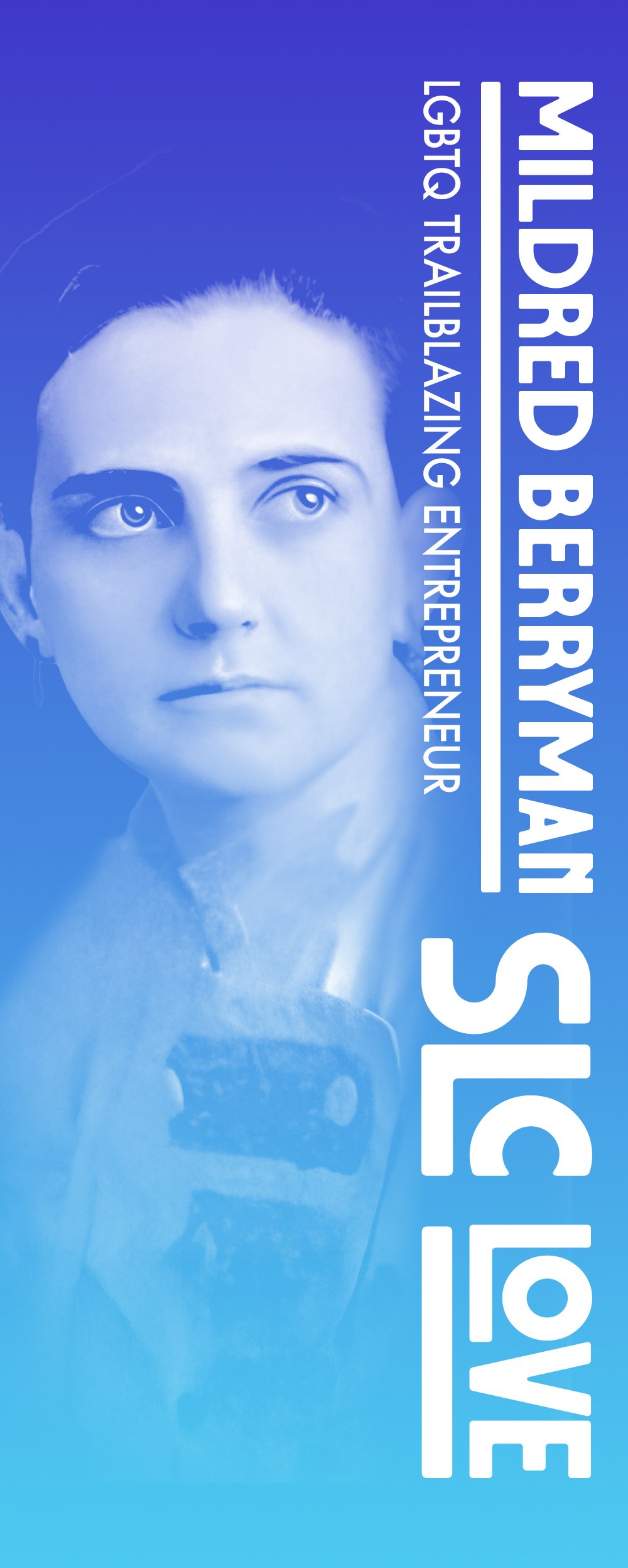
Mildred Berryman
Utah’s Quiet Pioneer of LGBTQ+ History
Long before “LGBTQ+” was a familiar acronym, before Pride parades marched through Salt Lake City, and decades before same-sex relationships were decriminalized, a young woman named Mildred “Milly” Berryman began documenting the lives of people like herself. In the 1920s, at just 19 years old, Berryman embarked on what is now recognized as Utah’s first study of homosexuality—a groundbreaking act of courage in a time of silence and stigma.
Berryman’s project, known as The Psychological Phenomena of the Homosexual, was both academic and deeply personal. Conducted during her years at the University of Utah, it included interviews with 23 lesbian and gay participants in Salt Lake City. At a time when being openly gay risked social ruin, arrest, or institutionalization, her willingness to listen, document, and affirm was radical. She sought not to pathologize, but to understand—and, in doing so, she preserved rare and invaluable testimony from a hidden community.
Though the thesis was never officially published, likely due to the cultural climate of the era, Berryman’s work remained quietly influential. It was rediscovered decades later, affirming that queer lives and stories had always existed in Utah—even if they were pushed into the shadows.
Beyond her research, Berryman lived openly within her own circles. She worked as an artist, raised a daughter, and maintained long-term same-sex relationships despite the risks. Friends and historians describe her as resilient and unapologetic in private, even while navigating a society that denied her public recognition.
Today, Berryman is remembered as a pioneer—a woman ahead of her time who preserved a history that might otherwise have been erased. Her courage to see and record the humanity of queer Utahns nearly a century ago laid early groundwork for the generations of advocates, caregivers, and community leaders who would follow. In giving voice to lives once silenced, she carved out a legacy of truth that still resonates: that LGBTQ+ people have always been here, and their stories deserve to be told.